Multi-Static Radar Systems
Spatially distributed radar for multi-target tracking and spatial diversity
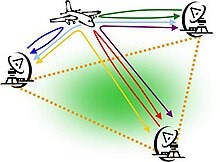
Overview
Multi-static radar uses separated transmitters and receivers to observe targets from multiple aspect angles, improving detection robustness for low-RCS (Radar Cross Section) targets and reducing sensitivity to clutter, interference, and stealth shaping. By exploiting spatial diversity, multi-static configurations overcome fundamental limitations of monostatic radar and provide richer measurement geometry for target tracking and classification.
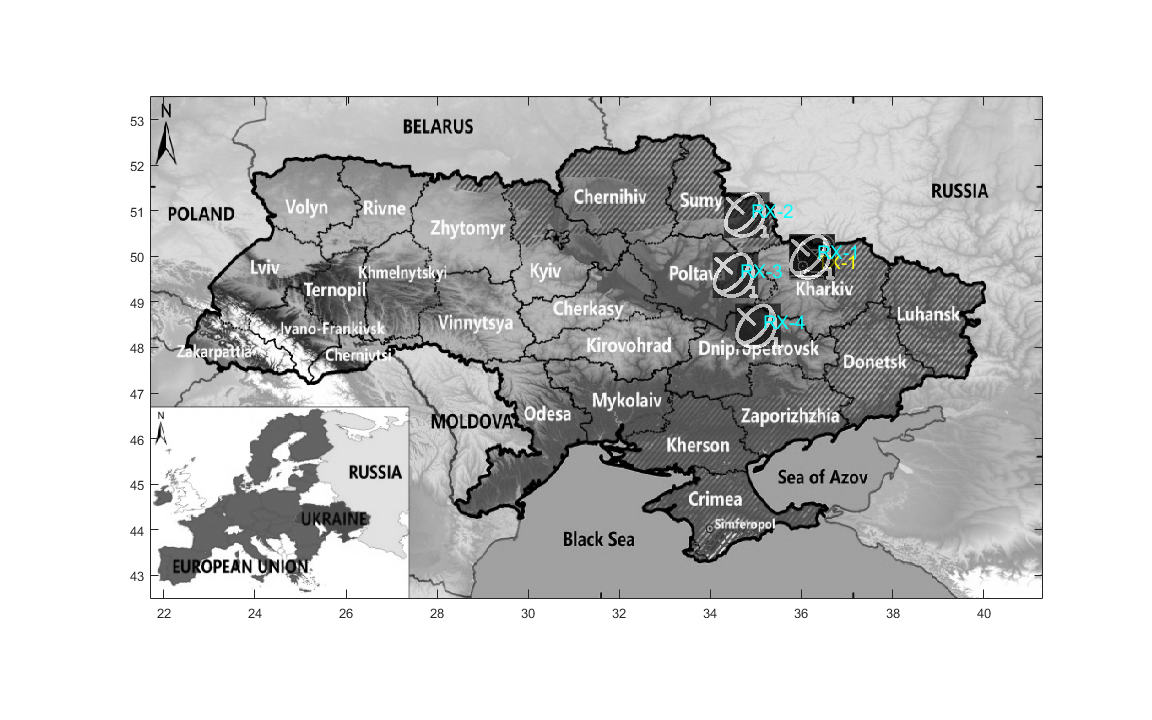
Simulation Map
Simulation environments model the geometric distribution of radar nodes, target trajectories, and measurement uncertainty. Monte Carlo trials across diverse target scenarios are used to validate plot fusion algorithms and assess tracking performance metrics including detection probability, false alarm rate, and positional accuracy.
Multi-Static Systems Demo
The following demonstration illustrates the multi-static radar system processing pipeline, including plot-level data fusion, track initiation, and multi-target tracking performance in a simulated scenario.
Overview
A. Gunes and G. Caliskan, “A New Plot Fusion Approach for Multi-Static Multi-Target Tracking,” 2025 IEEE Radar Conference (RadarConf25), Krakow, Poland, Oct. 2025, pp. 728–733.
DOI: 10.1109/RadarConf2559087.2025.11205024